

You’re home from the hospital. The baby is three days old and sleeping in two-hour stretches. Somewhere between the 3 a.m. feeding and your fourth cup of coffee, you remember: the second passport won’t happen on its own.
For binational families, the newborn period comes with a document deadline that nobody puts on the baby shower invitation. Some registration windows open at birth and close within weeks. Missing them doesn’t just mean paperwork later. In some cases, it means a legal option is gone for good.
This guide covers what your baby actually needs, in what order, and what has to happen to those documents before any foreign authority will accept them.
How Your Baby Gets Each Citizenship
Two legal principles govern nationality at birth, and most binational babies qualify under both at once.
Jus soli grants citizenship based on place of birth. The US, Canada, and most of Latin America use this rule. Any child born on their soil is a citizen, regardless of where the parents are from.
Jus sanguinis grants citizenship based on the parent’s nationality. Most of Europe and Asia operate this way. The baby’s birthplace doesn’t matter; what matters is whether at least one parent holds that country’s citizenship.
The important thing to understand is that automatic legal acquisition is not the same as documented citizenship. Your baby may have a legal right to two passports from the moment she takes her first breath, but until you file, that right exists only on paper. US law does not require a US citizen to choose between US citizenship and another nationality, and most European countries take the same position, but neither government will hand over a passport without an application.
Some of those applications have tight windows. Turkey and several Latin American countries require consulate registration within 30 to 90 days of birth. The US Consular Report of Birth Abroad (CRBA) has no hard expiration, but waiting years makes the evidence gathering harder and occasionally uncovers deadlines you missed for the other country.
Your Baby’s Document Stack

Everything starts with the birth certificate. It is the foundation document that every subsequent filing depends on, and the single biggest mistake new parents make is ordering just one certified original.
Order multiple certified originals at the hospital or immediately afterward. Most vital records offices issue them on request, and the cost is minimal compared to the time lost when you need three copies and have one. A certified original is not a photocopy, not a scan, and not the short-form summary some hospitals hand you as a keepsake. You need the long-form certified copy with the registrar’s seal.
Beyond the birth certificate itself, the registration package for the second citizenship will also require documents that establish your baby’s eligibility through you:
- Both parents’ valid passports
- Both parents’ birth certificates
- Marriage certificate, or an acknowledgment of paternity if you are unmarried
- Proof of residency where required by the specific country
These are supporting evidence, not your baby’s own documents, but they are required in every country combination I’ve seen.
What Happens Before the Birth Certificate Crosses a Border
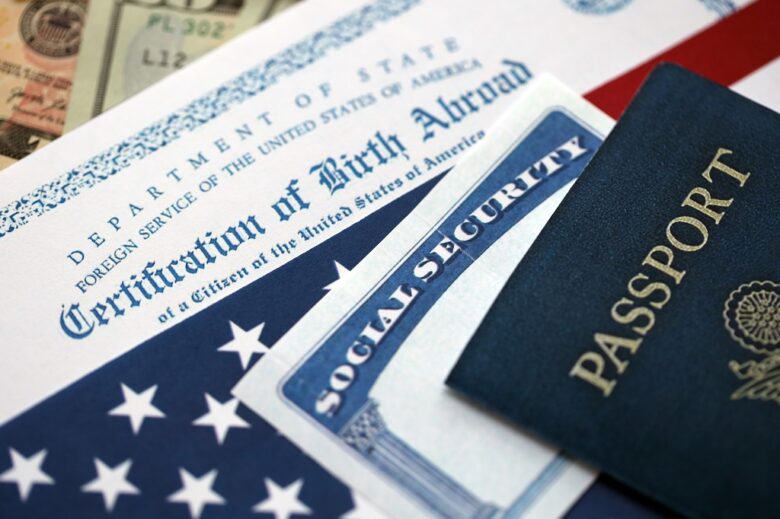
Most parents don’t anticipate this part. A birth certificate issued in the US is not automatically valid at a German civil registry, a Turkish consulate, or a Mexican immigration office. Two separate problems have to be solved before a foreign authority will treat it as a real document: authenticity and language.
Authenticity is handled through an apostille, an official stamp issued by a designated authority in the country that issued the document. An apostille is an official authentication that verifies the validity of your birth certificate for use in countries that follow the Hague Apostille Convention. Foreign authorities may not accept your document without it. The Hague Convention covers most of Europe, the Americas, and many other nations. For countries outside the convention, a longer process called embassy legalization applies instead, where the document has to be verified by a diplomatic mission before it is accepted.
Language is handled through translation. A birth certificate in English means nothing to a registrar who works in German, Turkish, or Spanish. You will need a certified birth certificate translation completed by a qualified professional, not a bilingual family member. Many countries also require the translation itself to be apostilled separately, so check the specific requirement for the country you are filing with before you start.
One exception worth knowing: within the EU, Regulation (EU) 2016/1191 significantly simplified the procedures: certain public documents, including birth certificates, are exempt from the requirement of legalization or apostille, and multilingual standard forms can be attached as a translation aid, which in many cases eliminates the need for certified translations when moving documents between EU member states.
What Each Country Adds on Top
Once you have the core stack, here is what each second-country registration typically requires beyond it.
US (for babies born abroad to American parents): File a Consular Report of Birth Abroad (CRBA) using Form DS-2029 at the nearest US consulate or embassy. The US citizen parent must prove at least five years of physical presence in the US, with at least two of those years after age 14. The presence of both parents and child at the Consular Section is required for most cases.
Germany (baby born abroad to a German parent): Register through subsequent entry at Registry Office I in Berlin. There is no hard deadline, but earlier is consistently easier. Unmarried parents need additional paternity acknowledgment and custody documentation.
Turkey: Register with the Turkish Family Register (Nüfus) and submit a form for the civil registry. Pay close attention to the correct transliteration of the baby’s name, including any Turkish special characters, since a mismatch between documents causes delays.
Italy (citizenship by descent): Requires a complete chain of apostilled and certified translated documents going back through the Italian ancestor. Note that as of May 2025, Italian citizenship by descent is limited to two generations.
Mexico: The US birth certificate must be apostilled and translated into Spanish by a certified translator, then filed with the Mexican Civil Registry.
Three Things to Do Before You File Anything

Order multiple certified originals immediately. The hospital can usually arrange this on the day of birth registration. Reordering weeks or months later adds processing time you may not have.
Build a one-page tracking document. List each country, its deadline, the required documents, and which parent owns each task. Share it with your partner and keep it somewhere you’ll both actually find it.
Store originals and travel copies separately. Once both passports are issued, keep them both current. Child passports in many countries are only valid for five years, and an expired document creates its own set of problems when you need to travel.
FAQ
Conclusion
Every document in this guide flows from one piece of paper: the certified birth certificate you order at the hospital. Get multiple originals on day one, track the deadlines, get translations certified, and build the file in layers. The second passport is worth the paperwork.