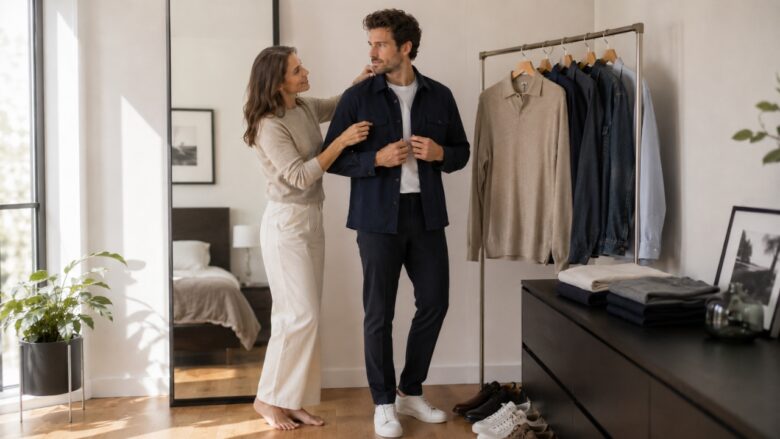
Upgrading his look works best when it feels like life just got easier, not like he’s become your latest makeover experiment. The play here is subtle: refine the fit, swap tired pieces for better versions, introduce colors that vibe with his existing rotation, and select items that actually fit his rhythm.
Focus on his daily staples: denim, tees, sneakers, jackets, work shirts, hoodies, and outerwear. A guy rarely resists a style bump when it fixes a tangible problem, like scratchy fabrics, beat-up shoes, sloppy proportions, or outfits that just don’t cut it for dinner, work, or family events.
Menswear favors effortless utility. Recent menswear coverage underscores practical polish, relaxed tailoring, breathable fabrics, and foundational basics rather than chasing fleeting, costume-level trends.
Start With Fit, Not Fashion
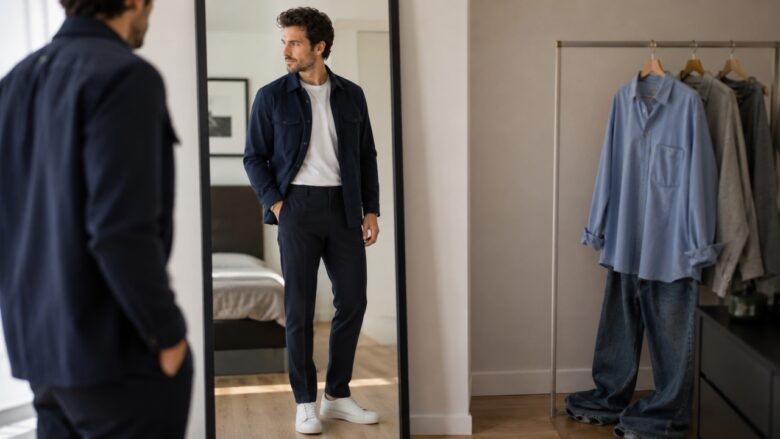
Fit beats logos, trends, or premium price tags every time. A standard navy overshirt that actually hits the shoulder will always smoke a designer jacket with sleeves drowning his hands.
Prioritize three zones: shoulder seams, trouser break, and shoe silhouette. If his tees strain at the gut or drag to his knees, swap them for a heavyweight cotton cut with structure.
If his jeans pool over his sneakers, switch to a straight or athletic taper. If his dress shirts billow, grab a slimmer cut before even considering a tailor.
The golden rule: elevate the item, not the identity. Trade “your shirts are trash” for “I grabbed this one; the fabric is softer, and the cut is sharper.”
Use Replacement Shopping as the Cover Story
The path of least resistance? Swap out gear that’s already dead. Worn-out sneakers, washed-out black jeans, frayed collars, busted belts, and tired hoodies are your entry points.
| His Current Rotation | The Quiet Upgrade | Why It Wins |
| Beater running sneakers | Sleek leather or suede sneakers | Casual, but sophisticated |
| Thin graphic tee | Heavyweight essential tee | Better silhouette, zero noise |
| Baggy jeans | Straight-leg denim | Timeless, never trendy |
| Faded hoodie | Structured zip jacket | Same comfort, cleaner lines |
| Shiny dress belt | Matte leather belt | Subtle, high-impact finish |
| Wrinkled overshirt | Cotton twill overshirt | Essential layering, elevated |
Price is a factor in 2026. ThredUp’s 2026 Resale Report notes 72 percent of consumers are feeling the pinch, while the global secondhand market is tracking toward $393 billion by 2030.
Secondhand, outlet, and seasonal sale shopping make an upgrade feel smart, not indulgent.
Build Around His Existing Uniform
Most guys have a locked-in uniform. Dark denim, black trainers, hoodies. Or chinos, polos, loafers. Or workwear: overshirts, heavy denim, boots.
Don’t war against the uniform. Perfect it.
For the hoodie-and-denim guy, upgrade the hoodie, sharpen the denim, and swap the sneakers. For the business-casual guy, introduce textured knit polos, a navy blazer, or brown loafers. For the gym-gear fanatic, transition him from performance shorts to drawstring trousers, merino tees, or a clean bomber.
GQ’s 2026 menswear essentials still lean on rock-solid basics, the perfect white tee, reliable jeans, derby shoes, and a navy blazer. The takeaway: basics outlast loud statement pieces every time.
Choose Colors He Already Trusts
Color upgrades should feel like a natural evolution. If he lives in black, charcoal, and navy, introduce olive, stone, dark brown, or cream. If he’s a blue guy, add washed denim, chambray, navy knitwear, and muted grey.
Pantone’s Color of the Year for 2026 is Cloud Dancer, a soft white. For men, that’s a green light: off-white tees, cream knits, pale overshirts, and crisp neutrals.
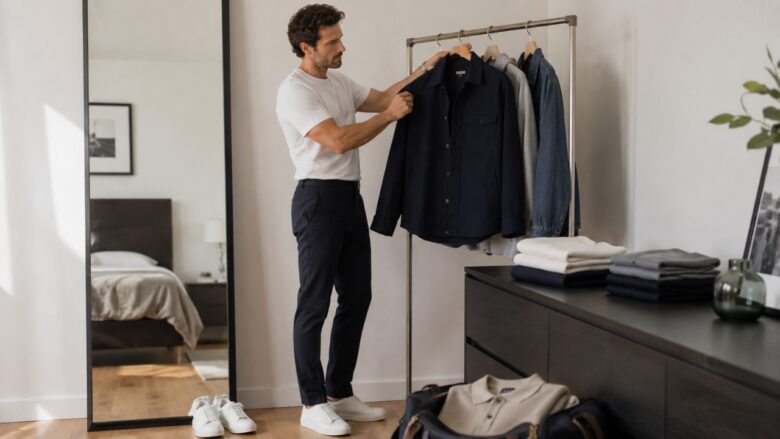
Men bail on clothes that feel stiff, itchy, tight, or fussy. Fabric is the secret weapon. Better cotton tees hold their shape. Merino wool regulates heat better than bulky synthetics. Suede softens casual shoes. Cotton twill overshirts feel more rugged than cheap polyester. Stretch denim gives guys who hate rigid jeans a reason to evolve. Clothing shapes behavior – “enclothed cognition,” as a 2012 study famously put it, though later research shows the effect is nuanced. The takeaway: clothes aren’t magic, but comfort, fit, and intention radically shift confidence. A style upgrade dies if the new stuff hides in the back of the closet. Put better gear where he naturally reaches. Hang the new overshirt near his current jacket. Fold the premium tees on top. Prep the clean sneakers by the door before dinner. Toss the nicer knit polo in his bag for the weekend. Convenience wins. Also, kill the friction. If a piece requires dry cleaning or babying, he’ll avoid it. Stick to machine-washable, wrinkle-resistant, breathable, and truly comfortable gear. Men respond better to style nudges tied to an event. Say: “That place is a bit upscale, maybe wear the navy shirt.” Avoid: “You need to dress better.” Occasions provide the reason; he gets to keep the agency. A real upgrade respects the frame. Slim guys hit harder in structured jackets, straight jeans, and medium-weight fabrics. Broader guys look sharper in open overshirts, darker trousers, and tees with enough weight to drape, not cling. Shorter guys gain from clean trouser breaks, monochromatic pairings, and jacket lengths that hit the hip. Don’t copy influencer fits without checking the math. An oversized coat looks like a statement on a model; it looks like a costume on someone with a different lifestyle or frame. Accessories are the finishing move, not the start. Swapping out a bulky, overstuffed nylon billfold for slim leather wallets and card holders can elevate his entire presence. A killer watch means nothing if the shirt beneath it fits like a tent. Start small: a clean belt, better socks, a decent weekend bag, a sharp strap, frames that match his face, or a basic cap sans logos. Grooming matters, too: a tighter haircut, a clean beard, moisturizer, or a fresh scent makes the clothes look intentional. Don’t overwhelm. One visible change per outfit is plenty. “Without noticing” doesn’t mean “manipulative.” It means “low friction.” Style is deeply personal, but he should still recognize himself in the mirror. The healthiest version of a partner-led upgrade relies on observation, encouragement, and offering better options. Compliment what works. Pick pieces that align with his core taste. Ask questions: “Does that fabric feel better?” or “Do you like the weight of this shirt?” His feedback is your best data. After a month, the wardrobe looks sharper without a total reboot. Better yet, he starts choosing the upgraded pieces on his own. The quiet upgrade is about making superior choices feel instinctive. Improve the fit, replace the worn-out, respect his uniform, prioritize fabric, and anchor the upgrades to real life. Modern menswear is leaning into wearability, value, and practical polish, so subtle evolution is exactly what’s trending. The result isn’t a partner who looks like someone else; it’s a partner who looks more confident, more intentional, and entirely himself.Upgrade Fabric Before Upgrading Style
Make Better Clothes Convenient
Use Occasions, Not Criticism
Shop With His Body Type in Mind
Upgrade Grooming and Accessories Last
Keep the Ethics Clean
A Simple 30-Day Upgrade Plan
Week Action Goal Week 1 Replace one worn staple Immediate win Week 2 Add one better layering piece Instant polish Week 3 Introduce one new neutral Versatility Week 4 Upgrade shoes or belt Professional finish Summary