
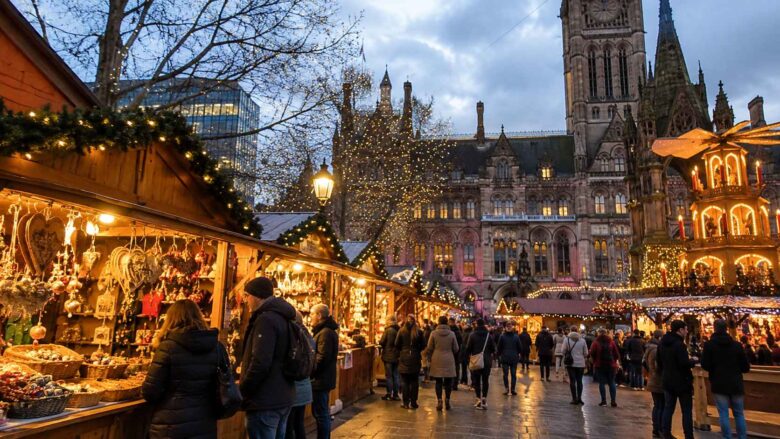
Manchester feels different once the temperature drops. The centre gets busier after dark, Christmas stalls spread across several streets and squares, pubs fill earlier, and the city becomes easier to enjoy as a compact winter break rather than a long sightseeing marathon.
You don’t need to spend the entire trip at the Christmas markets either. Manchester has enough museums, football, live music, restaurants, bars and neighbourhoods to fill several days, and most of the useful areas sit close enough together that you can move between them on foot or by tram.
For winter 2026, the main Christmas Markets run from November 6 to December 22, with Albert Square and Cathedral Gardens continuing until January 3, 2027. The city has 210 stalls spread across ten central locations, so the market is better treated as part of Manchester rather than one attraction you visit and leave.
Start With the Christmas Markets, but don’t Stay in One Square
View this post on Instagram
Manchester Christmas Markets are spread across the centre, and each section has a slightly different purpose.
Albert Square is the main festive hub, with food, drinks, covered seating and larger attractions. St Ann’s Square has more of the classic market feel, with seasonal drinks, food stalls and live performers.
Exchange Square is particularly useful if food is the priority. Yorkshire pudding wraps, bratwurst, hot chocolate and mulled wine are all part of the 2026 line-up. King Street moves closer to bars and restaurant-style food, including pizza, arancini, gyros and pies.
Lincoln Square is new as a dedicated food-and-drink area for 2026. The official council programme lists jerk chicken, lasagne, Korean corn dogs, hot drinks and covered seating under a heated marquee.
The easiest way to experience the markets is to move through them as you explore the centre. Albert Square, St Ann’s Square, King Street and Exchange Square are close enough that there is little reason to spend several hours standing in one place.
Albert Square Is Back at the Centre of Christmas in Manchester
Albert Square has returned as the main festive space after years of work around Manchester Town Hall. In 2026, it stays open later into the season than most of the other market sites, continuing through January 3.
The square includes a 50-metre Ferris wheel, a vintage helter-skelter, food stalls, covered seating and a festive pop-up pub with entertainment. Opening hours run later through most of November and December, so it works better as an evening stop than somewhere to rush through in the middle of the day.
If you arrive during the afternoon, spend daylight elsewhere first. Manchester Art Gallery, the Central Library and the surrounding civic quarter are all close, and Albert Square looks far better once the lights are on.
Where to Stay Depends on What You Want After Dark
@kezharnae.xo The Manchester Deansgate hotel | Definitely a recommended stay if your planning on going to Manchester any time soon✨ #CapCut #fyp #manchesterdeansgate ♬ Her Eyes – Charlie Jeer
Manchester has no shortage of central hotels, but location changes the trip more than a small difference in room quality. If you want to walk back after dinner or drinks, staying in the city centre is far more useful than saving a little money farther out.
Northern Quarter and Ancoats
Stay around the Northern Quarter or Ancoats if independent restaurants, bars, record shops and late evenings are high on the list. The area sits close to Piccadilly Gardens and Manchester Piccadilly station, with much of the city centre still within walking distance.
The Northern Quarter is busier and more concentrated around bars and music venues. Ancoats feels slightly calmer, with restaurants and converted industrial buildings around Cutting Room Square and nearby streets.
St Peter’s Square and Deansgate
Hotels around St Peter’s Square put you close to Albert Square, Manchester Central, the library and the tram network. It is one of the easiest parts of the centre for a first visit because you can reach several market locations quickly without starting every trip with public transport.
Deansgate stretches through a large part of central Manchester, so the exact hotel location matters. The southern end gives easier access to Castlefield, while the northern section moves you closer to Spinningfields, Exchange Square and the cathedral area.
Spinningfields
Spinningfields suits travellers who plan to spend more time in restaurants, cocktail bars and higher-end venues. It is still central enough for the Christmas markets, but evenings here feel very different from a night in the Northern Quarter.
The area also works well if you want Manchester to feel more like a dining and nightlife trip than a shopping weekend.
Manchester Is a Serious Winter Food City
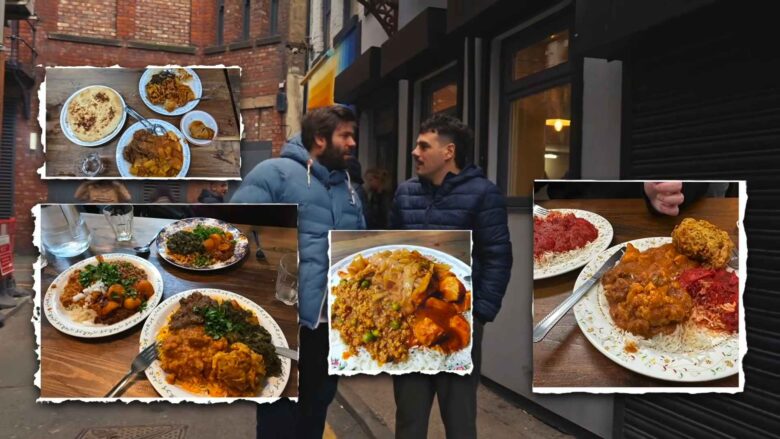
The Christmas markets give you plenty to eat, but they should not replace proper meals across the whole trip. Manchester has developed a much wider restaurant scene than the old stereotype of pubs, pies and curry alone.
Ancoats and the Northern Quarter are useful for independent restaurants and casual places. Chinatown remains one of the easiest parts of the centre for a late meal, particularly when you want something substantial after several hours outside.
Rusholme is still associated with South Asian food, though the restaurant scene now extends far outside the traditional Curry Mile. The city also has large Chinese, Indian, Pakistani, Middle Eastern and East Asian communities, which gives winter visitors far more choice than the seasonal stalls suggest.
If the weather turns bad, food halls are useful because nobody has to agree on one type of meal. Mackie Mayor in the Northern Quarter is one of the more central options, while other food halls and markets across Greater Manchester give you similar flexibility.
Manchester Nightlife Is Spread Across Several Neighbourhoods
There is no single Manchester nightlife district that works for everyone. Your evening can look completely different depending on which direction you walk after dinner.
The Northern Quarter has pubs, cocktail bars, basement venues and small clubs packed into a relatively compact area. It works well if you want to move between several places without planning the entire night in advance.
Canal Street and the Gay Village remain a major part of central Manchester nightlife, with bars and clubs lining the streets around the canal. Deansgate and Spinningfields lean more toward larger bars, restaurants and polished cocktail venues.
Oxford Road is useful if live music is part of the plan. Several venues, university buildings and bars sit along the same corridor, and the area continues south toward Rusholme.
Manchester evenings also start later than many day visitors expect. If you are staying centrally, there is little reason to force dinner into an early slot simply because the Christmas market stalls are beginning to close.
If you are traveling alone, and want to have some fun while visiting a nightclub or some other event, check out Boss Agency.
See Live Music in the City That Built Part of Its Identity Around It
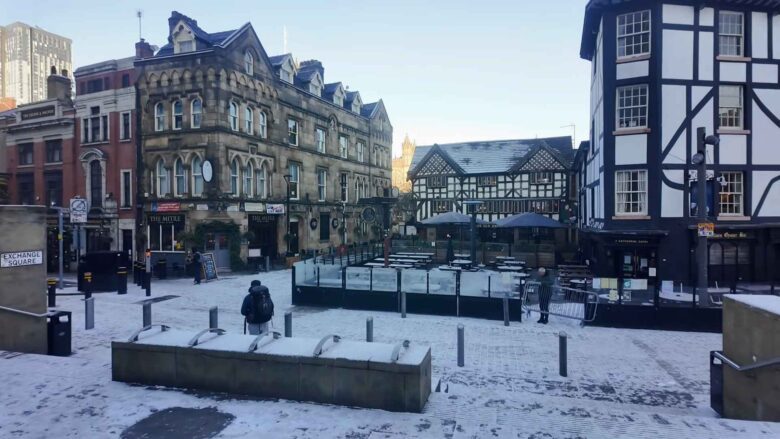
Manchester has spent decades selling itself through music, but winter visitors don’t need to rely on nostalgia. The city still has a dense live calendar ranging from small venues to large arena shows.
AO Arena and Co-op Live handle major international tours. Smaller venues around Oxford Road, the Northern Quarter and other parts of the centre are better if you want a gig to feel like part of the night rather than the entire event.
The city also supports club nights, electronic music, indie gigs and smaller local shows throughout winter. Checking the calendar before booking your hotel can be useful because a major concert or football fixture can change room prices across the centre.
Football Can Take Over an Entire Day
Manchester United and Manchester City make football one of the most obvious winter activities, but matchday affects more than the stadium. Trams become busier, pubs fill earlier and hotel demand can rise around major fixtures.
Old Trafford sits southwest of the centre and is connected by tram. The Etihad Stadium is east of central Manchester and also has its own tram stop.
If you cannot get match tickets, stadium tours are easier to plan and don’t consume an entire evening. They also work well on colder or wetter days when spending several hours walking around the centre sounds less appealing.
Museums Give You Somewhere to Go When Manchester Weather Does What It Does
A winter guide to Manchester that assumes every day will be dry is not very useful. Build at least a few indoor places into the trip and move them around depending on the weather.
Manchester Art Gallery sits in the centre and requires very little travel. The Science and Industry Museum in Castlefield covers Manchester industrial history and the development of science and technology, though some parts of the site can close during redevelopment work.
The People’s History Museum near Spinningfields focuses on social and political history. The National Football Museum is another easy central choice, especially if football is part of the reason for visiting.
Farther west, The Lowry and Imperial War Museum North sit around Salford Quays. The tram ride is straightforward, and the area gives you a completely different view of Greater Manchester from the compact streets around the Christmas markets.
Walk Through Castlefield on a Clear Winter Afternoon
Castlefield works particularly well when the sky clears for a few hours. Canals, old railway structures, warehouses and newer apartment buildings sit together in a part of Manchester that feels quieter than Market Street or Piccadilly.
The canals lead toward pubs and restaurants, and the area is close enough to Deansgate that it can be added without turning the afternoon into a separate excursion.
Winter light disappears early, so Castlefield is better before dinner than late at night if photography or walking is the point.
The Northern Quarter Is Better When You Stop Treating It as One Attraction
The Northern Quarter is usually reduced to street art, vintage shops and bars, but it works better as an area to keep returning to. Spend one morning there for coffee and shops, then come back another night for food and drinks.
Oldham Street, Tib Street and the surrounding roads carry independent shops, record stores and small venues. Afflecks is still one of the obvious indoor stops for alternative fashion, gifts and small traders.
Winter suits the area because much of the reason to visit is indoors anyway. You are moving between cafes, shops, bars and restaurants rather than standing outside staring at architecture for hours.
Don’t Ignore Ancoats
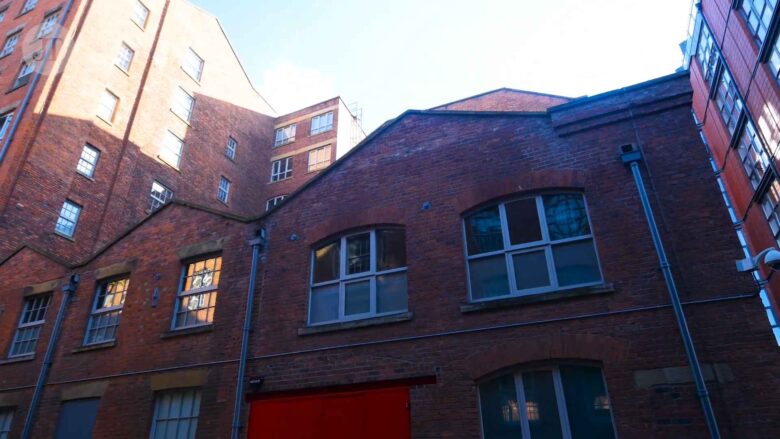
Ancoats sits directly beside the Northern Quarter but feels less hectic. Former industrial buildings now hold apartments, restaurants and businesses, while Cutting Room Square has become one of the main gathering points.
It is particularly useful for dinner. Spending the afternoon in the centre, eating in Ancoats and then moving into the Northern Quarter for drinks creates an easy evening without long taxi rides.
The area also connects naturally with New Islington and its marina, giving you another place to walk if the weather is dry.
Christmas Shopping Does Not End at the Market Stalls
Market Street and Manchester Arndale cover mainstream shopping, while King Street moves toward higher-end stores. The Northern Quarter is more useful for independent gifts, records and clothing.
St Ann’s Square and Exchange Square sit close to major retail streets, so Christmas shopping and the markets blend together without much planning.
The Trafford Centre is much farther from the city centre and is better treated as a separate shopping trip. It works if retail is one of the main reasons for visiting, but there is little reason to lose several hours travelling there if the trip is mainly about central Manchester.
A Winter Day Trip Can Give You a Break From the City
If you stay longer than a weekend, Greater Manchester gives you several ways to leave the centre without changing hotels. Trains and trams reach smaller towns and neighbourhoods quickly, and longer rail journeys open up much of northern England.
The Peak District is possible as a day trip, although winter weather and short daylight hours make planning more important. Chester, Liverpool and York are also reachable by train if Manchester is being used as a base for a longer northern England road trip.
For a shorter outing, Salford Quays is easier. You get museums, waterside walking and modern architecture without committing most of the day to transport.
View this post on Instagram
What Manchester in Winter Actually Feels Like
Expect cold, damp weather rather than picture-perfect snow. Rain can arrive and disappear several times in the same day, and darkness comes early in December.
That sounds less appealing on paper than it feels once you are in the centre. Manchester is built for moving between indoor places. A market stall can lead to a pub, a gallery can fill the wettest part of the afternoon, and dinner can stretch into a night out without another long journey across the city.
The busiest pre-Christmas weekends are a different experience from January or February. November and December bring lights, markets and larger crowds. January and February lose the Christmas atmosphere but make it easier to experience restaurants, museums and neighbourhoods without the same seasonal rush.
Final Thoughts
Manchester works in winter because you don’t have to choose between a Christmas break and a normal city trip. The markets give the centre a seasonal reason to visit, but the city still has enough music, football, food, museums and nightlife to carry the trip once you have had enough mulled wine and wooden stalls.
Stay somewhere central, leave room in the schedule for the weather and don’t spend the whole weekend following a fixed list. Manchester is much more enjoyable when part of the day is left open for the pub you notice around the corner, the restaurant you did not plan for or the neighbourhood that keeps you out longer than expected.