
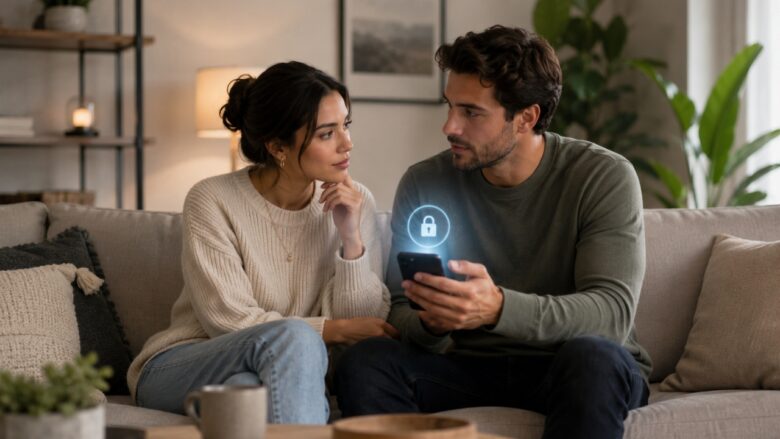
Let’s get one thing straight: you don’t need to hand over your phone password like it’s a friendship bracelet to prove your undying loyalty. In a world where our screens are basically extensions of our limbs, privacy is considered self-care.
Sure, sharing a code is a total lifesaver when you’re driving and need a DJ or during those frantic “where is the digital boarding pass?” airport moments. But here’s the golden rule: access should always be voluntary, mutual, and, most importantly, reversible.
Think about it: nowadays, your phone is less of a device and more of a digital diary on steroids. It’s got your banking, your messy group chats, that AI therapy bot you vent to, and your entire cloud-stored life.
Handing over that passcode is basically inviting someone into your internal monologue. The real relationship goal isn’t “knowing everything”; it’s actually sitting down and asking, “Why do we have each other’s codes, and where do the ‘no-go’ zones begin?”
Look, some couples are open books, and others prefer a little mystery. There’s no “one-size-fits-all” manual for this.
A Pew Research Center survey found that 75% of committed adults have swapped passcodes. Email access? That’s at 62%. Social media logins? About 42% of us have taken that plunge.
Unsurprisingly, the more you live together, the more those digital walls tend to come down.
But just because “everyone’s doing it” doesn’t mean it’s always healthy. That same study noted that 34% of partners have done a little “unauthorized investigating” (yikes!), even though 70% of us agree that secret snooping is a total relationship foul.
The takeaway? Having the key doesn’t mean you have the right to ransack the house. You can know the code for emergencies without needing to read every single group chat rant.
Even the latest 2024 smartphone-access research shows that while we’re all swapping codes, we aren’t always on the same page about the “why.” The vibe check we should all be aiming for?
Consensual and mutual access only.
Privacy Is Not the Same as Secrecy
Let’s clear up the confusion: Privacy is about maintaining your own space. Secrecy is about hiding things that actually hurt the team.
Venting to your sister about your stress or keeping your therapy notes to yourself isn’t “hiding secrets.” It’s just being a human with an internal life. You’re allowed to have a world that isn’t shared 24/7.
Secrecy enters the chat when you’re hiding things that break the relationship contract, like dating apps, hidden debts, or shady financial moves. That’s not privacy; that’s a red flag.
The distinction can be summarised simply:
Situation Usually Privacy Potentially Harmful Secrecy A friend shares personal news Yes No A private therapy note Yes No Planning a birthday surprise Yes No Hiding romantic messages No Yes Concealing joint debt No Yes Keeping a personal journal Yes No Maintaining a secret dating account No Yes
Expecting to see every thought is an impossible (and honestly, exhausting) standard. A thriving relationship thrives because two whole, separate people choose to be together.
Also, consider the third-party vibe! Your bestie didn’t sign up to have her deep, dark secrets read by your boyfriend just because you guys shared a passcode.
And don’t even get us started on work chats – those are legally and professionally for your eyes only.
What Does Sharing a Passcode Actually Mean?

A shared code should be a tool, not a tether.
It means he can skip a song while you’re driving, or you can grab a grocery list from his notes. It’s about convenience and safety, not surveillance.
Just because he can unlock your phone doesn’t mean he has a VIP pass to your 2018 photo archives or your DM history with your ex.
Without talking about it, things get messy. A 2026 privacy study coined the term “privacy silence,” where couples avoid talking because they don’t want to seem “suspicious.” We get it, it’s awkward. You want to signal trust, but skipping the conversation just leads to different people playing by different rules. The study also found we’re way more protective of our bank accounts than our Netflix logins. Sensible, right? Bottom line: Silence might avoid an awkward dinner tonight, but it’s a recipe for a blow-up later. Intent is everything. Is it about helping or hovering? There’s a huge difference between someone asking for reassurance and someone trying to control your digital life. Always check the energy behind the ask. In Australia, the eSafety Commissioner survey found that some people still think constant tracking and passcode demands are “normal.” Spoiler alert: they’re not. If reciprocity is missing, it’s a major red flag for coercive control. A single request isn’t a crisis, but a pattern of pressure and fear? That’s when you need to pay attention and protect your peace. Hot take: Checking a phone is like putting a Band-Aid on a broken leg. It might soothe the anxiety for five minutes, but it doesn’t fix the underlying trust issue. If trust has been broken, temporary transparency can be a bridge. But it needs to be a structured, voluntary agreement, not a permanent life sentence of being monitored. Every agreement needs an exit strategy. If the “checking” never ends, you’re just trapped in a loop of suspicion where no amount of proof is ever enough. And seriously, snooping is a lose-lose. If you find nothing, you still feel guilty. If you find something, you’ve broken trust in yourself to get the info. It’s messy business. Trust isn’t built in a settings menu. It’s built through real-life consistency, accountability, and time. A phone screen only tells a tiny fraction of the story. Plot twist: Maybe the problem isn’t the password, but the fact that you’re both staring at your phones instead of each other. “Phubbing” (phone snubbing) is the ultimate mood killer. A 2025 meta-analysis linked it to lower satisfaction and much more conflict. If you’re ignoring your partner for TikTok, of course, they’re going to feel a bit insecure! While the tech doesn’t necessarily *cause* the break-up, it certainly doesn’t help the vibes when you’re emotionally unavailable because of an app. Pew’s data shows half of us feel distracted by our partner’s phone during actual conversations. That’s a lot of missed connections over cat videos. The University of Connecticut research from 2026 suggests that feeling “phubbed” makes people feel less loved. Their advice? Set some ground rules for when the phones go away. You could have every password and still be worlds apart. Real intimacy is about focus, not just access. Try phone-free dinners or “no scroll” zones in the bedroom. It’s amazing what happens when you actually look into each other’s eyes instead of at a 6-inch screen. Even in the most “we share everything” relationships, some things are better kept individual. Your email is the master key to your digital life. Keep it secure, keep it yours. Even if you share a bank account, separate logins keep things clean and secure. Financial planning doesn’t require sharing a brain (or a password). Sharing work access isn’t just weird; it’s often a breach of contract. Protect your paycheck, keep your work life separate. Those 2FA codes are for you and you alone. The FTC warns that sharing these is a fast track to getting hacked. Don’t let your “openness” become a security risk. Shared vaults are great for the Netflix password, but keep your master password to yourself. Individual accounts are the way to go. We’re living in the future, people! No more sticky notes on the fridge. Apple has built-in shared password groups that are perfect for those “what’s the Wi-Fi?” moments. Google Password Manager also lets you share with your “family group.” It’s the sophisticated way to stay connected without being messy. And for the “just in case” stuff? Apple’s Legacy Contact feature is the responsible way to ensure your partner can access what they need if the unthinkable happens, without compromising your daily privacy. It’s about having a plan, not giving up your autonomy. Pro tip: Have the talk while things are good, not during a midnight fight about a mysterious notification. Not sure how to bring it up? Try this script: “I love how close we are, and I want to keep it that way by setting some healthy phone boundaries. I’m happy to share my code for practical stuff, but my private chats are my own space. How do you feel about that?” You don’t have to agree on everything instantly. The goal is to find a middle ground that makes both of you feel secure and respected. Trust your gut: if the “sharing” feels like a demand or a trap, it’s not about love, it’s about control. Digital abuse is real, and the eSafety guidance reminds us that consent can be withdrawn. You’re allowed to change your mind and your passcode. If you’re feeling unsafe, don’t make sudden changes that could trigger a reaction. Reach out to a support service from a safe device first. The Safety Net Project is a great resource for navigating these tricky waters safely. Keep it simple and sweet: Device access: We may know each other’s unlock codes for emergencies and practical tasks. Messages: We ask before opening personal messages, email, photos, notes, or browser history. Shared services: Household accounts are stored in a shared password group. Individual services: Banking, work, medical, primary email, and personal password-manager accounts remain separate. Location: Location sharing is optional and used for agreed purposes, such as travel or safety. Conflict: Neither person searches the other’s device secretly. Concerns are raised directly. Consent: Either partner may revise access without being accused, punished, or threatened. Review: We revisit the agreement after moving in together, marriage, children, a major trust breach, or a change in financial arrangements. Yes, you’re still allowed to be “you” while being part of a “we.” Your phone isn’t communal property just because you’re in love. Share for love, share for convenience, but never share out of fear. A relationship is built on respect for each other’s boundaries, not the dismantling of them. A password doesn’t prove anything. Real trust is about how you treat each other when the screens are off. Stay smart, stay private, and stay close.Healthy Access Versus Digital Surveillance
Healthy Access Digital Surveillance Given voluntarily Demanded as proof of loyalty Used for a stated purpose Used to search for evidence Equal rules for both partners One partner monitors the other Permission can be withdrawn Withdrawal causes threats or accusations No secret checking Phone searches happen without consent Limited to selected accounts Every account must remain accessible Location sharing is optional Location must remain active constantly Boundaries are discussed Boundaries are mocked or ignored Can Checking a Phone Rebuild Trust?
Phone Use May Matter More Than Password Sharing
Which Passwords Should Remain Separate?
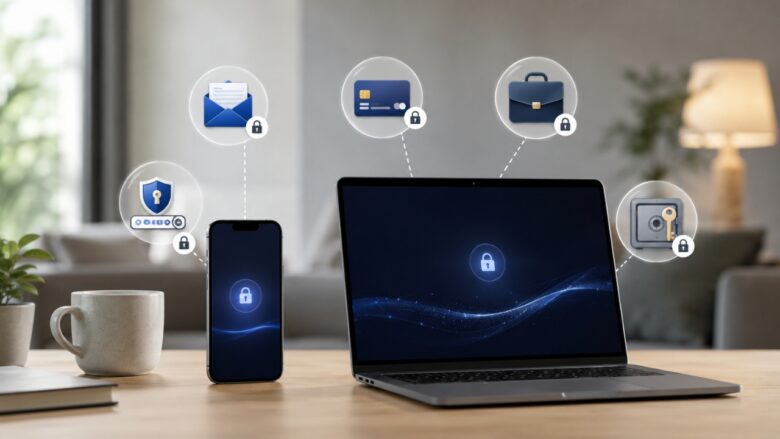
Primary Email Accounts
Banking and Investment Accounts
Workplace Accounts
Verification Codes
Password Manager Master Credentials

How Should Couples Discuss Phone Privacy?
When Is a Password Demand a Red Flag?
A Practical Phone Privacy Agreement
Final Verdict