
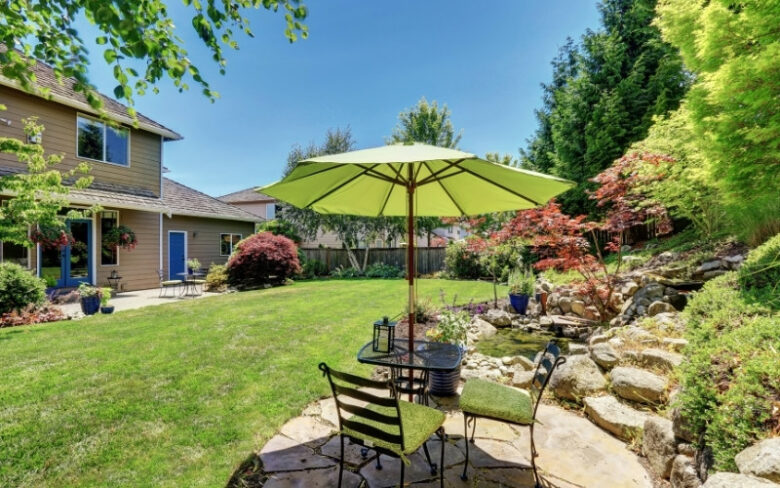
Most backyard budgets get blown in a garden center parking lot. You go in for a few things, come home with a trunk full of plants that have no real spot, and three weeks later half of them are sulking in the wrong place.
A dream backyard on a tight budget starts somewhere far less exciting: a notebook, a tape measure and a few honest questions about how you actually live. Get the planning right and every dollar after that works harder. Skip it and you usually pay twice.
Key Takeaways
- Watch your yard for sun, shade and drainage over a few weeks before committing to any layout.
- Decide how you will use the space first, because use drives every later spending decision.
- Contact 811 before any digging, even for a single tree or a few fence posts.
- Check permits, setbacks and HOA rules early, since a rejected project wastes time and money.
- Spend in phases, starting with soil and hardscape before moving on to plants and decor.
- Pick plants last, matching them to your light, water and climate instead of to impulse.
Start Your Dream Backyard With Observation, Not Shopping
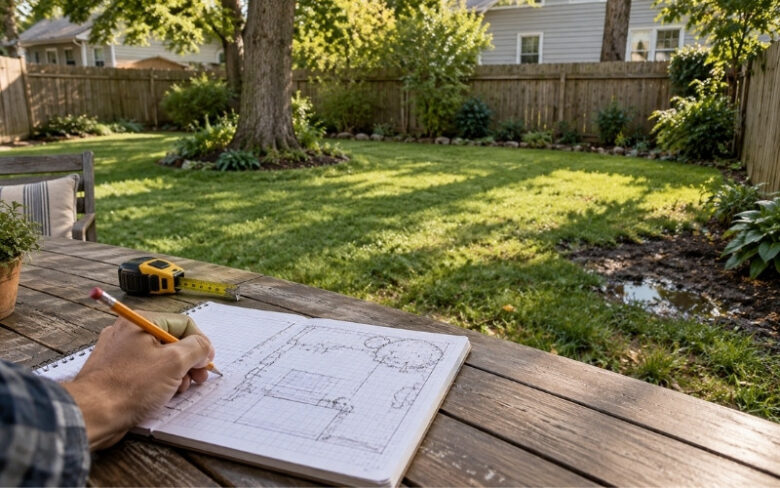
The cheapest tool in any yard project is your own attention. Before you rip anything out, spend two to four weeks simply watching.
Note where the light falls in the morning, at noon and late in the afternoon. A spot that looks bright at lunch might sit in shadow most of the day.
After a heavy rain, walk the yard. Where does water pool? Those puddles tell you where a patio could crack, where grass will stay soggy and where a rain garden might actually thrive.
Draw the yard to rough scale on graph paper. Mark the house, doors, trees, fence line, spigot and AC unit. It feels tedious. It also stops you from buying a ten foot table for a nine foot nook.
Decide What Your Dream Backyard Is Really For
A yard that tries to do everything usually does nothing well. Think about the next three to five years, not your fantasy weekend.
- Do you mostly eat outside, lounge, host friends or grow food?
- Do kids or dogs need open, durable ground?
- How many hours a week will you honestly spend on upkeep?
Once the answers are clear, sketch rough zones: seating near the kitchen door, a play patch you can see from inside, a vegetable bed in the sunniest corner. Personality can come later through small, cheap touches, and there are plenty of ways to add style to your garden once the bones are in place.
Here are some ideas if you don’t have a clue.
Check the Rules Before Your Dream Backyard Breaks Ground
Paperwork is boring, but it costs far less than tearing out a finished patio. This is where many budget plans quietly fall apart.
Call 811 Before Any Digging
According to 811, the free national before you dig service, you should reach out a few business days ahead of any digging, including planting trees or installing fences. Some utility lines sit just inches below the surface.
Permits, Setbacks and HOA Approval
View this post on Instagram
Covered patios, decks, retaining walls, sheds and taller fences often need a permit, and most must respect setbacks from property lines and easements. Requirements vary by city and county, so call your building department before buying materials.
When an application asks for a scaled plan showing the footprint and distances to the lot lines, some homeowners use Get A Site Plan patio drawings for that piece of the paperwork. In an HOA, get written approval before anyone starts working.
State Water Rules Can Reshape the Plan
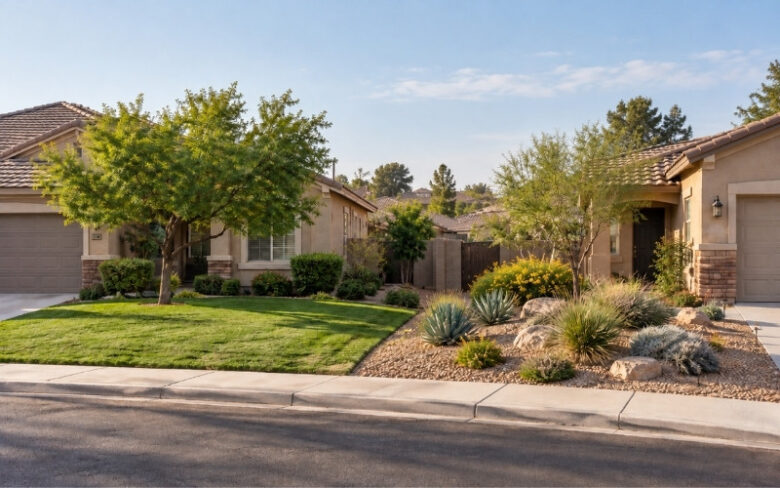
Landscaping rules swing wildly from state to state. In the Las Vegas valley, the Southern Nevada Water Authority explains that state law bars using Colorado River water on purely decorative grass at commercial, multifamily and HOA common areas, although lawns at single family homes are not covered.
Texas sits at the opposite end. The Texas Legislature changed the Property Code so an HOA cannot ban drought resistant landscaping or water conserving turf, or unreasonably reject an owner’s plan for it. Check your local rules before you decide between lawn and no lawn.
Build Your Dream Backyard Budget in Phases
Phasing is the single best trick for a real budget. You finish the yard in layers that each make sense on their own.
| Phase | What to Tackle | Why It Comes in This Order |
| 1. Groundwork | Drainage fixes, grading, soil testing and amendments | Every later layer depends on healthy soil and water moving the right way |
| 2. Structure | Paths, patio, edging, fencing or privacy screens | Hardscape is messy to install around established plants |
| 3. Big plants | Trees and large shrubs | They take the longest to mature, so planting early pays off |
| 4. Fill and finish | Perennials, ground cover, lighting, furniture | Easy to add as money frees up and needs become clearer |
Put Money Into the Bones First
We all want green grass that is trimmed to perfection, that is the dream of most homeowners. Here is how to do it.
And of course, fun stuff is tempting, but upkeep and structure earn their keep. In its outdoor features report, the National Association of Realtors found that standard lawn care recovered an estimated 217 percent of its cost at resale and landscape maintenance about 104 percent, while a fire feature and landscape lighting both came in under 60 percent.
Basic care also does wonders for curb appeal if you ever sell.
Save more by splitting a bulk mulch delivery with a neighbor, digging divisions from a friend’s overgrown perennials and reusing salvaged bricks as edging.
Choose Plants for Your Dream Backyard Last
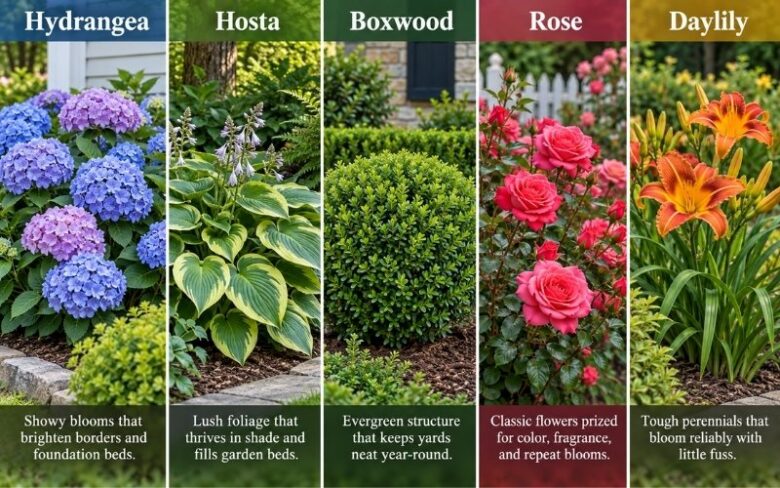
Now, finally, the plants. Because you already know your light, soil and drainage, this part gets easier and cheaper.
EPA WaterSense reports that the average household uses more water outdoors than for showering and laundry combined, mostly for landscape irrigation.
Grouping plants by water needs and choosing species suited to your region keeps that bill under control.
Start Small and Let Plants Fill In
Smaller pots cost less and often settle in faster than big, root bound specimens, and annuals are easy to start from seed.
As West Virginia University Extension points out, a first garden usually needs more basic equipment than an established one, so budget for a hose and a trowel before flats of flowers.
A handful of well chosen shrubs for a large garden will do more than dozens of impulse buys. Short on space? Dwarf varieties make fruit trees in small spaces a realistic option.
FAQ
Your Dream Backyard Starts on Paper
The yard you picture does not need a huge budget. It needs a plan, patience and the discipline to buy plants last. Grab a notebook this weekend, walk your yard with fresh eyes and write down phase one. Your dream backyard gets closer with every step you plan before you spend.