

Mediterranean semi-retirement sounds simple, lower rent, fresh markets, walkable towns, good weather, and a slower pace.
Semi-retirement means some income may continue.
That income could come through part-time consulting, seasonal work, remote freelance work, rental income, portfolio withdrawals, or several sources at once.
Estimates can help with early planning, but they often miss visa costs, flights home, peak-season rent, healthcare surprises, inflation, and emergency reserves.
A stylish Mediterranean semi-retirement can cost less than many U.S. retirement lifestyles, but safe planning requires more than rent-and-groceries math.
Let us see what we can expect.
Expected Monthly Spending

City-level cost estimates give a more useful planning benchmark than one’s personal spending history.
Forbes says foreign retirement planning should include healthcare, taxes, permission to stay long term, and travel connections, not only basic living costs.
According to data provided by Numbeo, the current planning estimates look like this:
| City | One-person monthly cost |
| Paphos, Cyprus | About $938.70 / €811.30 |
| Valletta, Malta | About $1,009.70 / €872.70 |
| Chania, Crete, Greece | About $939.10 / €811.70 |
| Split, Croatia | About $952.80 / €820.40 |
| Bari, Italy | About $954.60 / €823.10 |
Taken together, these city estimates support a tiered planning approach.
A single person in a lower-cost Mediterranean city may be able to plan around $1,500 to $2,000 per month, depending on rent and lifestyle.
A couple should usually expect a higher range, especially once housing quality, healthcare, restaurants, transportation, residency costs, and emergency reserves are included.
Family-of-four estimates, such as those for Chania and Bari, should not be compared directly with single-person figures for Valletta, Paphos, or Split.
Mediterranean Budget Anchors
Cost estimates work best when paired with lifestyle details and budget cautions.
A low monthly number may look attractive, but each destination has its own tradeoffs tied to rent, healthcare, visa rules, language, transport, and seasonality.
Paphos, Cyprus
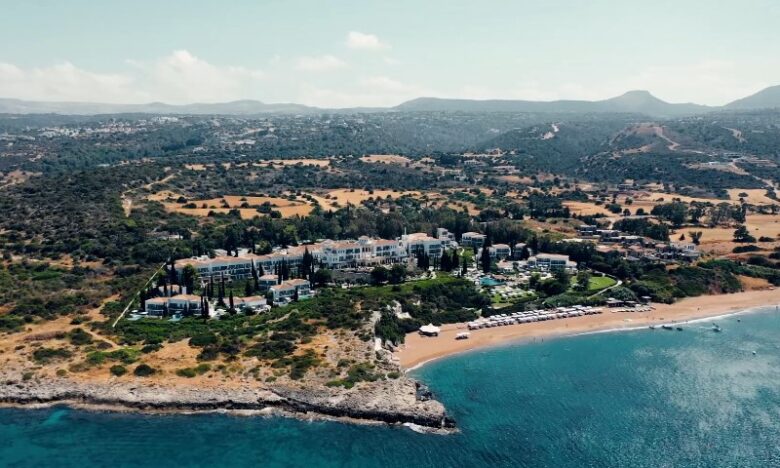
Paphos should be treated as its own Cyprus location, not as a general Cyprus stand-in.
Kiplinger describes Cyprus as an affordable Mediterranean retirement option and names coastal cities such as Paphos, Limassol, and Larnaca as places retirees may consider.
It tends to feel more retirement-oriented than Limassol, with expat networks, English widely used in daily services, coastal living, nearby villages, and a generally lower-cost profile than Cyprus’s premium markets.
Cyprus-wide estimates still help set the baseline. Single-person monthly costs are estimated at $938.70 / €811.30, excluding rent.
A family of four is estimated at about $3,544, or €3,053, excluding rent. Cyprus is listed as roughly 14.6% less expensive than the U.S. overall, with rent around 25% lower than the EU average.
For Paphos planning, several numbers matter most:
| Planning item | Estimate |
| Retiree couple’s budget estimate in Cyprus | About €1,500 to €2,500 per month |
| Single-person Cyprus-wide cost estimate | About $990, or €853, excluding rent |
| Limassol comparison point | About $1,079, or €932, excluding rent |
| Category F income estimate | €9,568 per year for a main applicant, plus €4,613 per dependent |
| Possible foreign pension tax treatment | 5% flat-rate option |
| Inheritance tax | None |
Paphos can suit retirees who want a slower coastal base without giving up access to healthcare, banking, legal services, restaurants, and expat support.
Residents may be able to access GeSY, Cyprus’s General Healthcare System. Some retirees may still choose private insurance for faster appointments, broader access, or added comfort.
Property costs should be treated separately from monthly living costs. Retirees who plan to buy, build, or relocate permanently near Paphos need a separate capital budget for land, construction, VAT, permits, utilities, furnishing, and ongoing maintenance.
For readers researching modern building options in Cyprus, Elythera metal frame homes may be relevant because the company offers this sort of construction in Cyprus, including options in the Paphos area.
Budget caution: Paphos can be more affordable than Limassol, but costs still vary by neighborhood, property type, sea access, rental season, and healthcare choices. Electricity, summer air-conditioning, imported goods, private healthcare, and flights can push spending above headline estimates.
Valletta, Malta
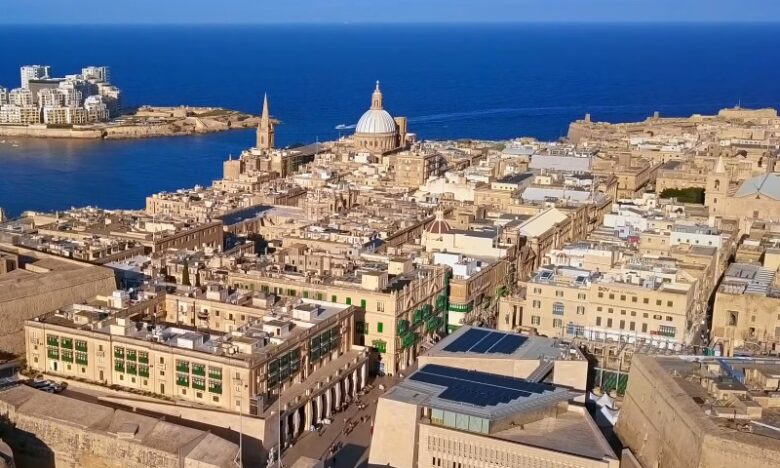
The capital of Malta, Valletta, has an approximate monthly cost of $1,009.70 / €872.70 for a single person, including rent, about 30% less than the U.S. average.
English is an official language, which helps American retirees handle daily tasks. Malta also offers around 300 days of sunshine per year.
Several practical details can affect daily cost and convenience:
- Official language advantage: English
- Sunshine estimate: around 300 days per year
- Public bus note: reportedly free for residents over 60
- Nearby access: ferry links to Gozo
Valletta is known for Baroque architecture, harbor views, historic streets, and walkability. Furthermore, the city is listed as a UNESCO World Heritage Site.
Healthcare quality is often considered strong by European standards.
Budget caution: Malta can cost more in popular expat and tourist zones. Island living can raise imported-goods costs. Malta’s Global Residence Program may matter for retirees, but tax and residency rules should be verified before moving.
Chania, Crete, Greece
Chania has an approximate monthly cost of $939.10 / €811.70 for one person.
Island life, fresh food, historic architecture, and a slower pace make it attractive for retirees who want scenery and value without the prices attached to more famous coastal cities.
Seasonality deserves special attention here because annual costs can look very different than winter costs:
- Summer rents can rise sharply
- Tourist-season meals and services can cost more
- Island logistics can increase travel costs
- Imported goods may cost more than expected
- Specialist medical access may require mainland travel
Budget caution: Greece’s Financially Independent Person visa may matter for retirees, but current income, insurance, and documentation rules should be verified before planning.
Split, Croatia
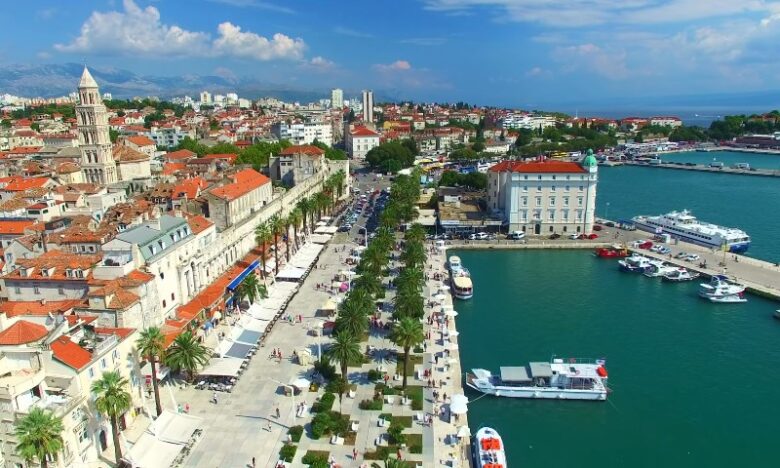
Split has an approximate monthly cost of between $952.80 / €820.40 for a single person, around 36% less than the U.S. average.
Adriatic coastal life, Roman history, ferry links, and walkable streets all support semi-retirement planning.
Split’s old town sits inside Diocletian’s Palace, a 1,700-year-old Roman complex still used as part of the living city.
Ferry links reach islands such as Hvar and Brač. Croatia adopted the euro in 2023, which can simplify euro-zone travel and currency planning.
Budget caution: Croatia has become more expensive in recent years, especially in coastal tourist zones. U.S. citizens may apply for a Temporary Residence Permit, sometimes through prepaid rent or property purchase, but local requirements should be verified.
Bari, Italy
Finally, we will talk about Bari, Italy, which has an approximate monthly cost of $954.60 / €823.10.
Southern Italian daily life, food markets, trains, a historic center, Puglia access, a working port, a seafront promenade, an opera house, and old-town food culture make Bari a lower-cost alternative to Tuscany or Rome.
Bari can work especially well for retirees who want Italy with lower pressure on rent and daily expenses.
Train access, markets, and a real working-city rhythm help keep life practical.
Budget caution: Italy can involve heavy bureaucracy. Healthcare paperwork, visa steps, tax planning, and housing documents should be handled early. Italy’s Elective Residence Visa may offer a route for retirees with sufficient passive income, but the passive-income, housing, and insurance requirements should be confirmed.
Real Monthly Budget Categories
A useful Mediterranean budget should be built by category. Rent alone cannot show the full cost because healthcare, food habits, paperwork, transportation, and lifestyle choices can shift the total.
Eurostat’s housing publication is useful for the broad housing point because it tracks differences in renting, ownership, housing quality, house prices, and rents across Europe.
Housing Has the Biggest Swing Factor
Housing usually determines the budget. Monthly planning should include rent, utilities, internet, short-term rental premiums, and owner costs such as building fees or maintenance.
EarthVagabonds tracked $90,831 in housing costs over 10 years, making housing their largest category.
Their housing total covered daily, weekly, and monthly rentals through Airbnb, Booking.com, and direct landlord arrangements.
Naturally, smaller towns usually cost far less than capital cities. Local-style living can reduce rent, utilities, and daily spending.
Big planning mistake: using off-season rent as the annual housing number. A safer plan uses average yearly housing cost, not the cheapest winter month.
Malta, Cyprus, and Crete can also add pressure through seasonal rentals and imported goods.
Groceries, Restaurants, and Social Spending
Food budgets should separate groceries, cafés, restaurants, wine, beer, and social life. Local markets and supermarkets can keep costs controlled.
Restaurant-heavy living can quickly turn a retirement budget into a travel budget.
Daily eating may stay predictable. Cafés, wine, lunches out, guests, and family visits can change the monthly number.
For Cyprus specifically, Eurostat-based reporting says household consumption expenditure per capita reached 21,879 PPS in 2024, placing Cyprus among the higher-spending EU countries.
Healthcare and Insurance
View this post on Instagram
Healthcare planning should include private insurance, doctor visits, prescriptions, dental care, vision care, emergency reserves, and travel medical insurance for people moving between countries.
The P4H Network summarizes WHO Global Health Expenditure Database figures showing Malta’s current health expenditure per capita at US$3,353, equal to 9.5% of GDP, with out-of-pocket spending at 30%.
Spain has a major public healthcare system, but non-EU retirees still need to consider eligibility and insurance.
For Cyprus healthcare, the official GeSY source is still the strongest, but if you want a different supporting source, a recent Cyprus healthcare guide explains that GeSY is available to Cypriot, EU/EEA, and third-country nationals with valid residence permits.
A semi-retirement budget should cover normal premiums and bad-year medical exposure.
Transportation
Transportation planning should include local buses, taxis, ferries, car rentals, regional trains, flights home, moves between countries, and visa-related travel.
A Mediterranean budget can look affordable on paper, but mobility costs can change the total quickly, especially for retirees who split time between islands, coastal cities, and family in the U.S.
Malta can reduce local transport costs because holders of a personalized Tallinja Card can travel free on Day, Night, and Special Services bus routes across Malta and Gozo.
Split can work well for island access because a direct fast ship line connects Split with Hvar.
Split also has a year-round ferry route to Stari Grad on Hvar, which can make island visits easier to plan outside peak tourist periods.
Cyprus, Malta, and Crete need extra planning for flights, ferries, and periodic big-ticket movement because coastal and overseas retirement can bring added costs tied to insurance, healthcare, currency changes, and local legal planning.
FAQs
Closing Thoughts
Mediterranean semi-retirement can cost less than many U.S. retirement options, but the full budget has to include more than rent, groceries, and sunny weather.
Best budget is the one that keeps you healthy, legal, mobile, comfortable, and financially calm.