
Along the storied Langelinie promenade in Copenhagen, a striking marble memorial commemorates the Danish merchant sailors who perished during World War I. Beyond its role as a symbol of national memory, the Statue of Peace stands as a bridge between Denmark’s rich seafaring history and the artistic legacy of Italy.
Many who come to see the bustling harbour or the iconic Little Mermaid ultimately find themselves drawn to this serene site, quietly captivated by its graceful form and the quiet dignity it lends to the waterfront.
The choice of Italian marble as the building material gives the memorial a luminous presence, particularly striking in the shifting daylight of Copenhagen.
As visitors move closer, the cool, pale surface of the marble invites touch and contemplation. Set along the Langelinie promenade, the memorial’s location is no accident: situated where ships dock and tourists disembark, the site encourages spontaneous visits and habitual stops from those who live and work nearby.
The significance of this memorial lies equally in its aesthetic qualities and its deeper cultural meaning.
More than just a notable landmark, it signals an enduring commitment to remembrance, one that transcends national borders and brings together artistic sensibilities from across Europe.
Contents
Italian Marble and the Creation of The Statue of Peace
Source: euroweeklynews.com
The decision to create this monument came in the wake of World War I, when Denmark was reckoning with the loss of hundreds of civilian seamen.
The Danish Steamship Owners’ Association, seeking to ensure a lasting tribute, launched a campaign to commemorate those who had died at sea.
Originally, the plan was to use limestone, a material readily available and familiar to local builders.
However, as ideas evolved, Italian marble was chosen for its unmatched durability, classic beauty, and long-standing association with monumental art.
A national competition yielded the final design, entrusted to sculptor Svend Rathsack and architect Ivar Bentsen. Their vision was both simple and profound: the monument would rise with an elegance befitting its purpose but would also bear the weight of personal tragedy and collective memory.
Its 1928 unveiling saw dignitaries, the royal family, and many bereft families gathered together in recognition of a shared loss. From the beginning, it was clear that the marble base gave the memorial a unique character, connecting local memory to a broader international tradition.
The process of sourcing marble from Italy and transporting it all the way to Copenhagen was itself a feat of collaboration, and a statement about the lengths to which those commissioning the monument were willing to go.
Italian marble possesses qualities long admired by sculptors, resistance to time and weather, and an ability to showcase the sculptor’s art with clarity and grace. In using it, those behind the project ensured that the memorial would not only survive but inspire admiration for generations.
Symbolism and Craft in the Marble Base
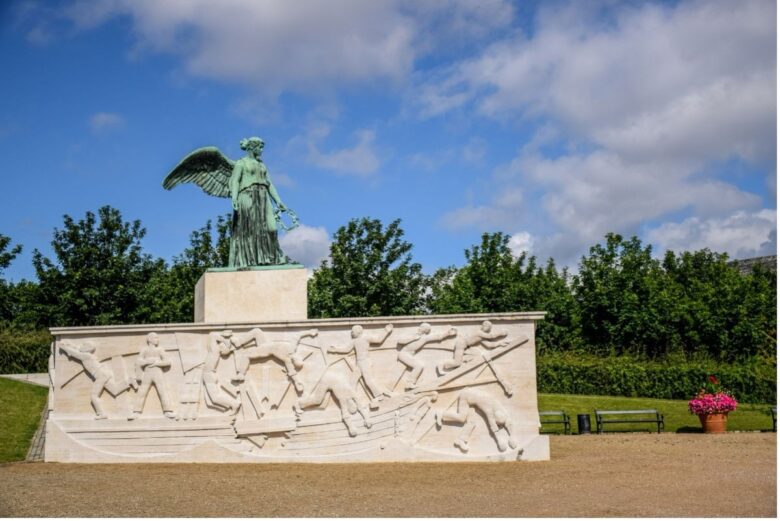
Resembling the prow of a ship, the Italian marble base establishes a direct relationship between the material and the sailors being honoured. Far from being purely decorative, every facet of the base is designed to deepen the memorial’s narrative function.
Known for its lasting beauty, Italian marble commemorates not just individual heroism, but the human qualities of endurance and dignity central to the tribute’s meaning.
Detailed reliefs carved into the marble capture scenes from maritime life: ships braving treacherous seas, sailors working together against the elements, quiet moments of hope and camaraderie amid looming danger. The names of 648 Danish merchant seamen are etched into the stone, ensuring that they are remembered individually as well as collectively.
For many visitors, tracing a name on the marble provides a rare, tangible link to the past.
Over the decades, the original limestone elements suffered from the unforgiving Scandinavian climate, and by the early 2000s, restoration was essential. Italian marble was again chosen to replace damaged portions.
The 2011 rededication restored not just the memorial’s structural integrity, but also its aesthetic coherence and international symbolism. Each restoration effort reinforces the intent behind the monument: to serve as both a national landmark and a site of shared European memory.
Artistic Choices and Emotional Presence

Source: blog.gettransfer.com
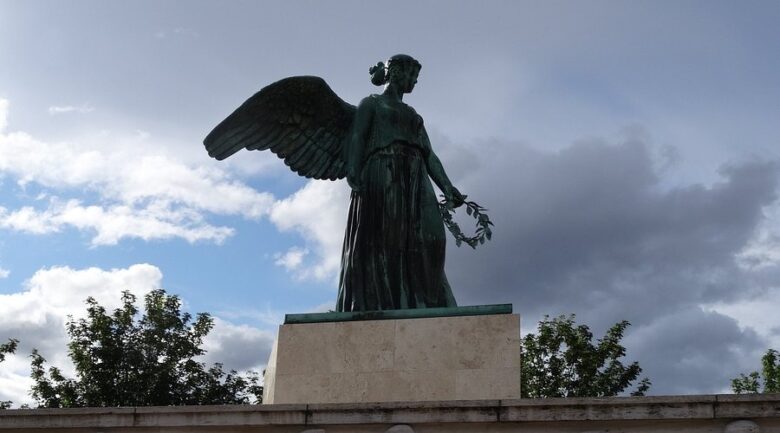
Crowning the marble plinth, a bronze angel looks out over the water with serene composure. Her wings, broad, protective, and graceful, seem to gather up the hopes and sorrows of the city. In her outstretched hand, she holds a laurel wreath, a classical symbol associated equally with peace and victory.
This figure is more than merely decorative; it embodies the aspirations and ideals the memorial is meant to honour.
The unveiling of the angel in 1928 was a grand occasion, attended by King Christian X and other high-ranking officials. A specially composed cantata echoed across the harbour, lending the day a tone that was both solemn and celebratory.
Today, even in the absence of ceremony, the angel continues to inspire contemplation, her unwavering poise inviting visitors to pause, consider the costs of conflict, and reflect on the enduring significance of peace.
Visitors routinely linger at the memorial’s base, drawn in by the interplay of form, material, and meaning.
The detailed carvings in the marble are particularly attractive to students, art enthusiasts, and historians, who see in them a vivid expression of collaboration and cultural fusion between Denmark and Italy.
Flowers, small tokens, and handwritten notes are often found at the base, evidence that the spirit of remembrance is very much alive.
A Living Landmark and Legacy
More than simply a relic of the past, The Statue of Peace has become part of Copenhagen’s living culture. Formal commemorations are held annually, bringing together maritime groups, veterans, and descendants of the sailors.
Informally, the memorial acts as a meeting point for locals and travellers alike, its marble base providing a natural bench from which to look out over the busy harbour or watch the sunset.
The presence of Italian marble throughout the memorial is more than an aesthetic choice; it’s a celebration of international cooperation and artistic dialogue.
The memorial thus serves as one of the city’s enduring connections to Europe’s rich sculptural traditions, reminding all who visit that remembrance and aspiration for peace are values shared across borders.
Connections Across Time and Place
Source: tripadvisor.com
What makes this site particularly meaningful is its accessibility. Situated close to the cruise terminal and several of Copenhagen’s best-known attractions, it invites spontaneous stops by people from all walks of life.
School groups come for lessons on history and art; tourists arrive to explore a lesser known but deeply significant site; city residents pass by on their way to work or leisure, finding a moment’s respite in its tranquil shadow.
The fusion of Danish design and Italian craftsmanship is most visible in the marble’s fine finish and the expressive lines of the angel sculpture.
The memorial stands as a rare example of a public artwork that is both deeply local in its meaning and genuinely international in its creation.
Throughout changing seasons and shifting times, the memorial endures. Its appeal lies not just in its striking appearance but in the way it brings together narratives of sacrifice, artistry, and shared longing for a more peaceful future.
For those searching for a meaningful experience on the Copenhagen waterfront, this site offers a compelling story, one that speaks to loss and hope, history and aspiration, all contained within the marble and bronze that look out eternally over the harbour.