
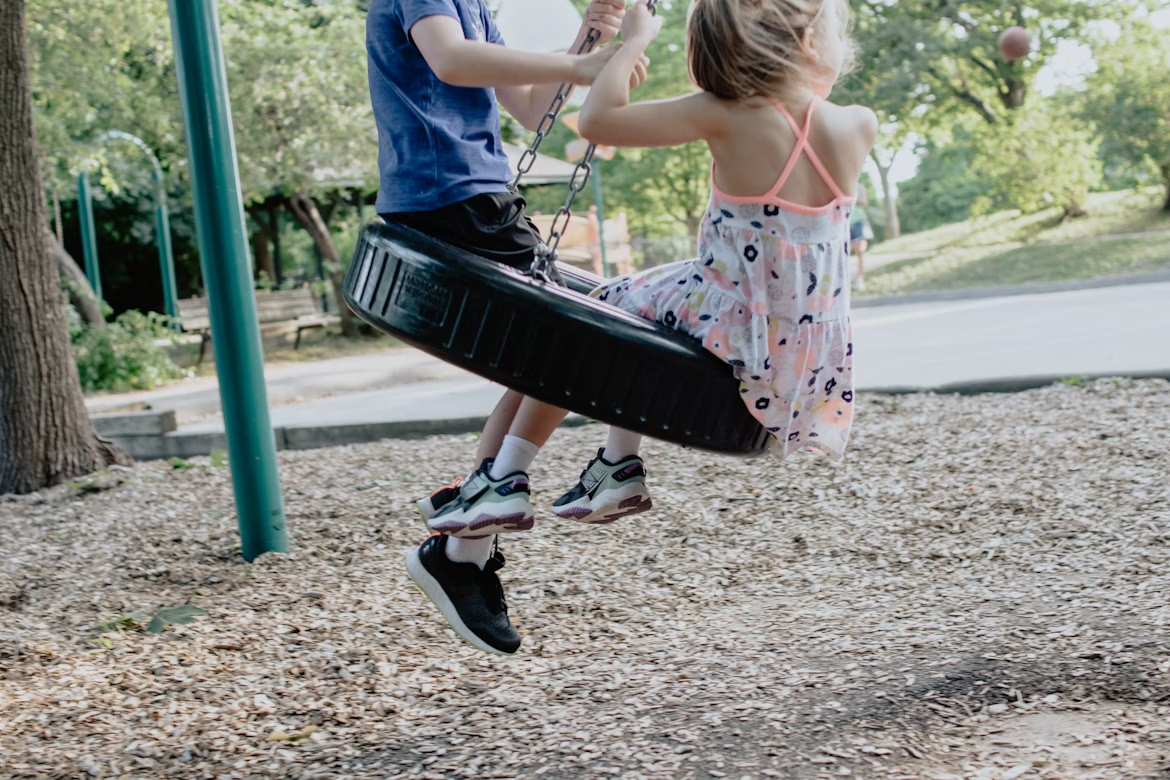
Buying your child’s first pair of school shoes can feel like a big moment (albeit a surprisingly complicated one!) It’s not just another thing on the back-to-school checklist; it marks the start of a whole new chapter. For many first-time parents, it’s the first time their child will wear shoes all day, every day – running, climbing, learning, and growing in them.
The right school shoes protect developing feet, support natural movement, and help children feel comfortable and confident from morning assembly to home time. Because children’s feet grow quickly, sometimes up to two sizes in a single year, finding a pair that fits properly and lasts through the term takes a little knowledge and preparation.
Understanding what makes a good school shoe
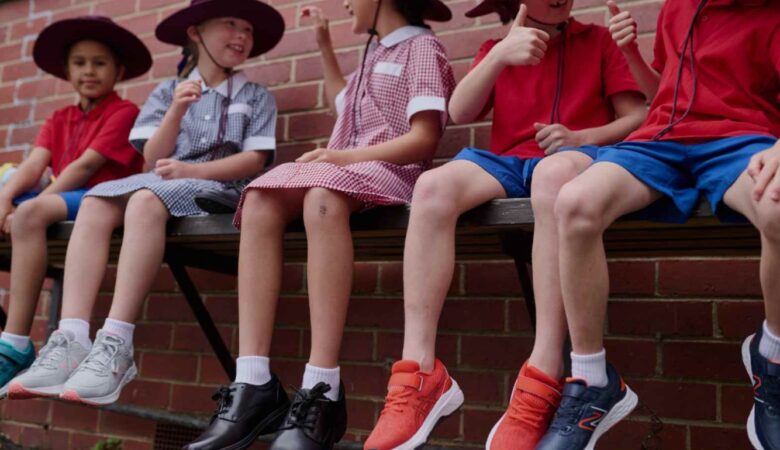
Before you even step into a shop or open a browser tab, it helps to know what separates a good school shoe from one that just looks the part. School shoes need to do more than match the uniform – they need to support, protect, and keep up with every playground sprint and classroom shuffle.
A quality school shoe should hold your child’s foot securely while allowing natural movement. Look for a firm heel counter (the back part of the shoe) that keeps the heel stable, a flexible sole that bends with the foot rather than against it, and a cushioned insole for comfort during long school days. This combination gives growing feet the structure they need without restricting them.
Children’s feet can get surprisingly warm, especially when they’re in shoes all day. Leather uppers are a classic choice because they’re durable, breathable, and mold to the shape of the foot over time. Synthetic materials can be lighter and more affordable, but they don’t always allow the same airflow. If you opt for synthetics, check that the lining is breathable and moisture-wicking to help prevent sweaty or uncomfortable feet. Small details can have a big impact on comfort and durability.
Sturdy toe caps protect against scuffs, secure fastenings like Velcro, buckles, or laces ensure a snug fit, and non-slip soles give stability on wet playground surfaces. If your child is still mastering independence, Velcro straps are often the easiest and quickest option for school mornings.
Shoes should feel light enough to move in but firm enough to protect the foot from hard surfaces. Too heavy, and they’ll drag; too flimsy, and they won’t last the term. When you gently bend the shoe, it should flex at the ball of the foot – not in the middle. That’s a good sign the sole supports natural movement.
The five must-haves in a school shoe:
- Firm heel support.
- Flexible sole that bends at the ball of the foot.
- Breathable upper (ideally leather).
- Secure fastening for a snug fit.
- Non-slip, durable outsole.
Getting the right fit
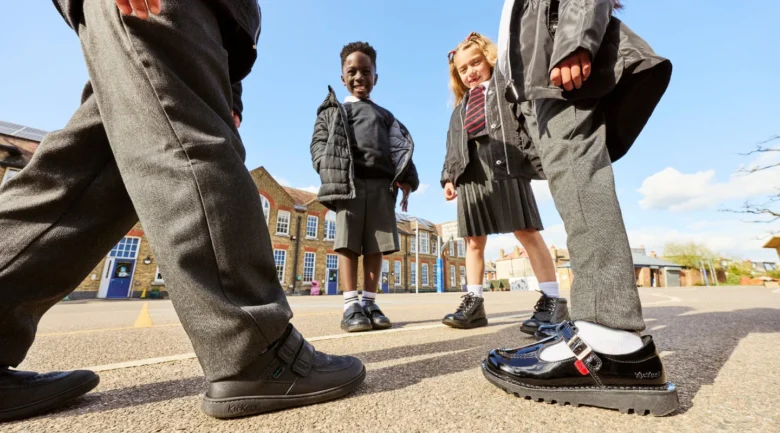
Even the best-made school shoes won’t help if they don’t fit properly. A well-fitting pair should support growing feet without squeezing or slipping, and give just enough room for movement and growth. Here’s how to get it right – whether you’re buying in-store or online.
Measure at the right time
Children’s feet can swell slightly during the day, so measure them in the afternoon or evening when they’re at their largest. Always measure both feet, as one is usually slightly bigger – and buy shoes to fit the larger foot.If you’re buying online, you can get a good estimate of size with a simple at-home method:
- Place your child’s foot on a piece of paper.
- Trace around it with a pencil, keeping it upright and steady.
- Measure the distance from heel to longest toe.
- Add around 1cm (about half an inch) to allow for growth.
- Compare your measurements with the brand’s size guide.
Width matters, too. Shoes should feel snug but not tight, with no gaping at the sides. If you can slide a pinky finger between the heel and the back of the shoe, that’s about the right amount of space.
When trying on shoes, have your child wear the same socks they’ll use for school – thickness can make a difference. Let them stand, walk, and even jog a few steps. Watch how the shoe moves: there shouldn’t be slipping at the heel, bulging at the sides, or pressure at the toes. Ask how they feel, but also trust what you see – children don’t always notice discomfort right away.
Children’s feet grow quickly, especially in the early school years. Re-measure every two to three months to make sure the shoes still fit comfortably. Signs that it’s time for a new pair include rubbing, red marks, or toes pressing against the end.
Expert tip: Always check the fit with the socks your child will wear to school – thicker socks can change the size you need.
Getting the fit right takes a few extra minutes, but it can save weeks of discomfort and prevent potential foot problems later on. It’s one of the simplest ways to help your child start the school year on the right foot – literally.
The differences between girls’ and boys’ school shoes
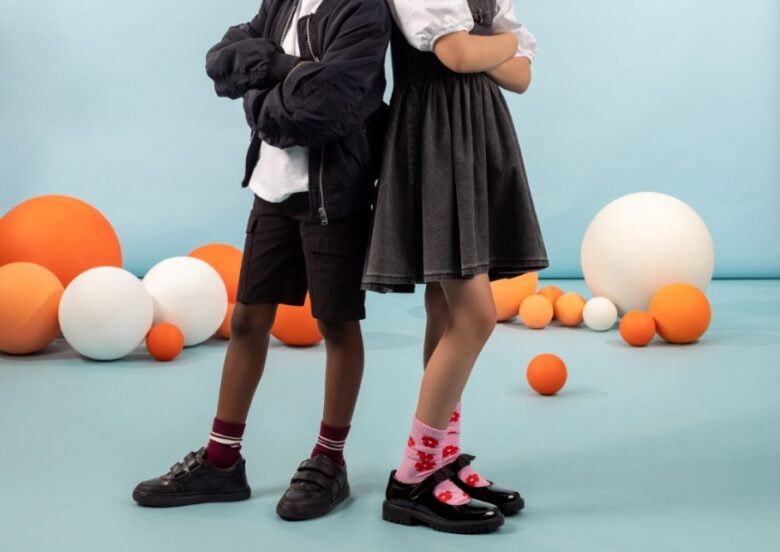
When you first start shopping for school shoes, you’ll quickly notice that girls’ and boys’ styles can look quite different and not just in appearance. These differences often reflect the way children play, move, and wear their shoes day to day. Knowing what to expect from each can help you find the right balance of comfort, durability, and design.
Structure and durability
In general, boy’s shoes tend to be built with extra reinforcement. Think thicker soles, sturdy stitching, and stronger toe caps designed to withstand running, climbing, and kicking about in the playground. The focus is on resilience – shoes that can handle energetic play without wearing down too quickly.
Girls’ school shoes, on the other hand, often prioritise flexibility and lighter materials. They’re typically designed for comfort and ease of movement, with slimmer soles and more breathable uppers. While still supportive, they may not be quite as rugged – so it’s worth considering how active your child is before deciding.
Fastenings and independence
Younger children benefit from easy closures like Velcro straps or buckles, which encourage independence and make school mornings smoother. Lace-up designs are better suited to older children who are confident tying them – they provide a closer, more secure fit and extra ankle support.
Style and school policy
Girls’ designs often include T-bar or Mary Jane shapes with a strap across the top, while boys’ styles tend to be more closed and traditional, with plain fronts or minimal detailing. Increasingly, schools are relaxing their rules and allowing sportier hybrids – trainer-style shoes that look smart enough for class but stand up to playground wear. Always check your school’s uniform policy before buying, as some are quite specific about acceptable colours and finishes.
The best choice ultimately depends on your child’s comfort and personality. Some girls prefer the look and sturdiness of a traditional lace-up, while plenty of boys opt for lightweight, breathable designs. Focus on fit, support, and durability rather than the label – a well-made shoe that matches your child’s activity level will always be the right choice!
So, first-time parents…
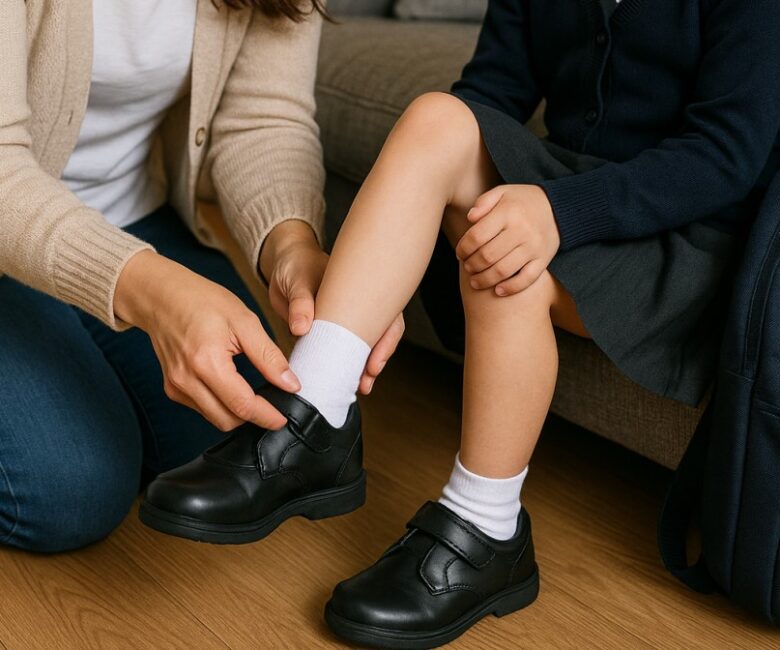
We all want to do right by our children. We want them to embrace their wild side, while also being comfortable and not costing an arm and a leg. The right pair gives your child comfort, confidence, and the freedom to focus on the fun and learning ahead – not sore feet or slipping soles.
By now, you know what really matters: a well-fitting shoe made from breathable, durable materials; the right balance of structure and flexibility; and care that helps them last through the term. Whether you’re choosing sturdy boy’s shoes built for adventure or lighter styles for comfort and movement, taking the time to find the right fit is always worth it.
Every child is different, and so is every school day – but with a bit of preparation, you’ll feel ready to choose school shoes that support every step of their growing journey!